Scripture Library
Texts, traditions, and paths of inquiry
How the library fits together
The books here come from one tradition, and several of them describe the others.
Read as a scrollAbout the collection and its connections
What is here
- The Upaniṣads, which close the Veda.
- The two epics, the Rāmāyaṇa and the Mahābhārata. The Bhagavad Gītā is a dialogue inside the Mahābhārata.
- The eighteen Purāṇas: creation, the ages of the world, the lines of kings and the lives of the gods.
- Books of philosophy and of practice.
How they refer to each other
- The Bhāgavata names all eighteen Purāṇas and counts their verses: 400,000 in all.
- The Nārada sets out the contents of each Purāṇa, one chapter for each of the eighteen.
- The Agni and Garuḍa Purāṇas each summarise the Gītā.
- The Bhāgavata, Brahmāṇḍa and Śiva Purāṇas share a setting: the Naimiṣa forest, where the bard Sūta speaks to the sages.
The map below follows these ties. Every link in it opens a chapter.
38 books on the map · 17 with their own table of contents · all eighteen Purāṇas, 12 of them in English
Where to begin
Our recommendation
Three books, in this order: a story, the teaching, then the Purāṇa most tied to the others. Between them they open every other shelf.
Step 1
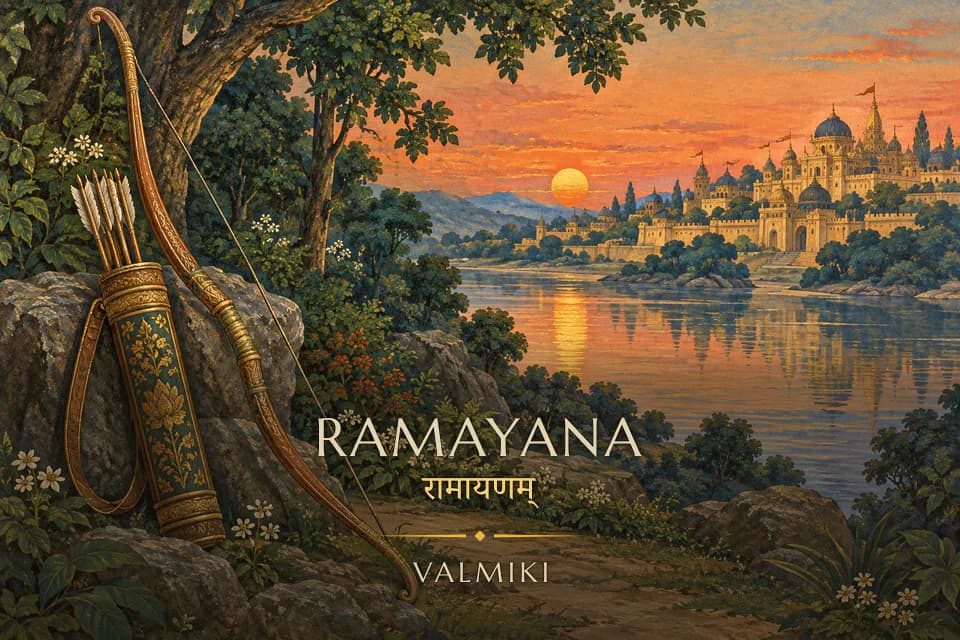
Begin with a story. The first poem tells Rāma's life in seven books; the Mahābhārata retells it, and the Yoga Vāsiṣṭha is set inside it.
Start with the Sundara-kāṇḍaStep 2
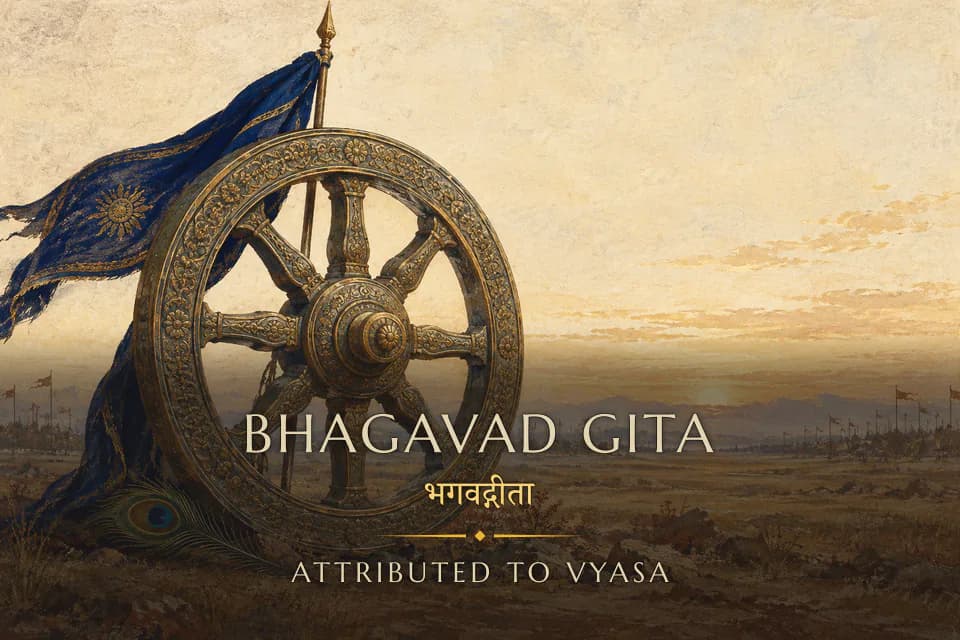
Then the teaching, a dialogue inside the Mahābhārata. The Agni and Garuḍa Purāṇas each summarise it. Here it is read in Sanskrit with Śaṅkara's commentary.
Start with chapter 2Step 3
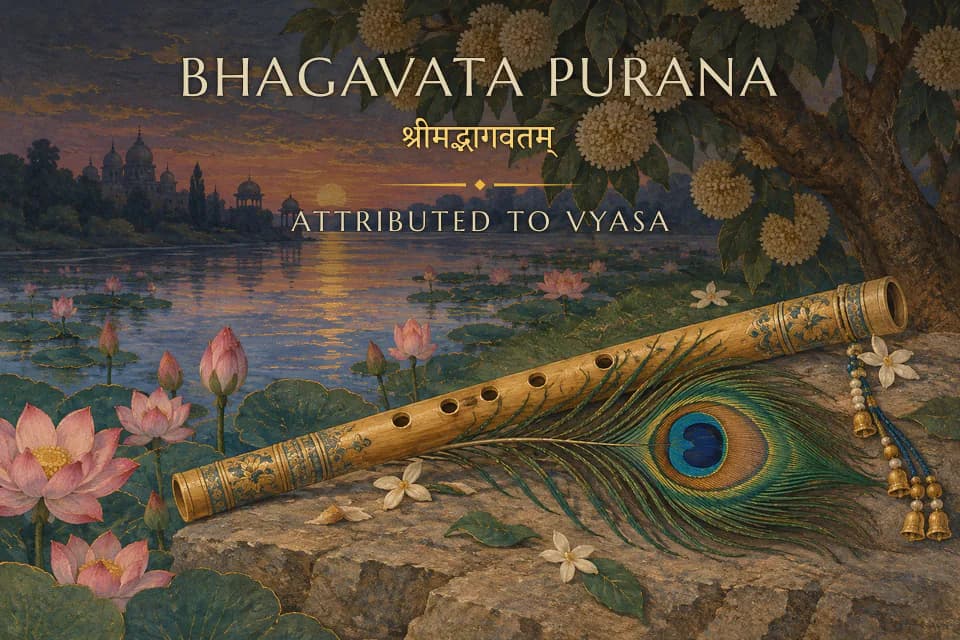
Then the Purāṇas, through the one most tied to the others. Its stories of Dhruva, Prahlāda, Pṛthu and the churning of the ocean come back across the shelf; Book 3 teaches Kapila's Sāṃkhya; Book 10 is Kṛṣṇa.
Start with the First Skandha
The map
Choose a book to see what it holds, who it is for, and the books it is tied to.
Śrutiwhat was heard
The Upaniṣads, at the end of the Veda: the root the other books keep returning to. The library holds nine of them in Sanskrit.
Itihāsaso it happened
The two epics. The Gītā is a dialogue inside the Mahābhārata; the Yoga Vāsiṣṭha is set in the Rāmāyaṇa; the Harivaṃśa carries Kṛṣṇa's story on.
Purāṇaof old
The eighteen, in the order the Bhāgavata lists them, with the verses it gives each: four lakh in all. The colour shows whom a book centres on.
Centres on:ViṣṇuŚivathe Goddessmany gods
Beyond the eighteen
Darśanaways of seeing
Philosophy in short verses: Sāṃkhya's spirit and nature, the Yoga that builds on it, and the Vedānta of the Upaniṣads.
Sādhanapractice
How to sit, breathe and see: the Nāth and haṭha manuals, two Śaiva tantras, and the Kriyā tradition.
Nāth and haṭha
Tantra
Kriyā Yoga
The same story, in several books
The Purāṇas retell one another. Open a story where each book tells it, and see what changes.
Dhruva
A boy turned away by his stepmother, who wins a place in the sky.
Prahlāda and Narasiṃha
The child who would not stop praying, and the man-lion who saves him.
The churning of the ocean
Gods and demons churn the sea; poison comes up before the nectar.
Pṛthu
The king born from Vena's body, who milks the Earth for food.
Dakṣa's sacrifice and Satī
Satī gives up her life at her father's sacrifice, and Śiva's grief.
The birth of Skanda
Śiva's son, born to defeat the demon Tāraka.
The three cities
Śiva burns the three flying cities of the demons.
Hariścandra
The king who would not break his word, whatever it cost him.
Vāmana and Bali
Viṣṇu as a dwarf asks King Bali for three steps of land.
Kṛṣṇa's life
From Kaṃsa's prison to Vraja, Mathurā and Dvārakā.
Gaṅgā
The river, her descent to earth, and her glory.
Puruṣottama at Purī
The shrine of Puruṣottama in Utkala, praised in two Purāṇas.
The Gītā and its echoes
Summaries of the Gītā inside the Purāṇas, and the other gītās they hold.
Drawn from the library's own chapter titles, its saved guides and the texts themselves. Lengths are those the Bhāgavata gives; our editions may hold less.